Installations and heating
How to size a radiator for a room: formula and example
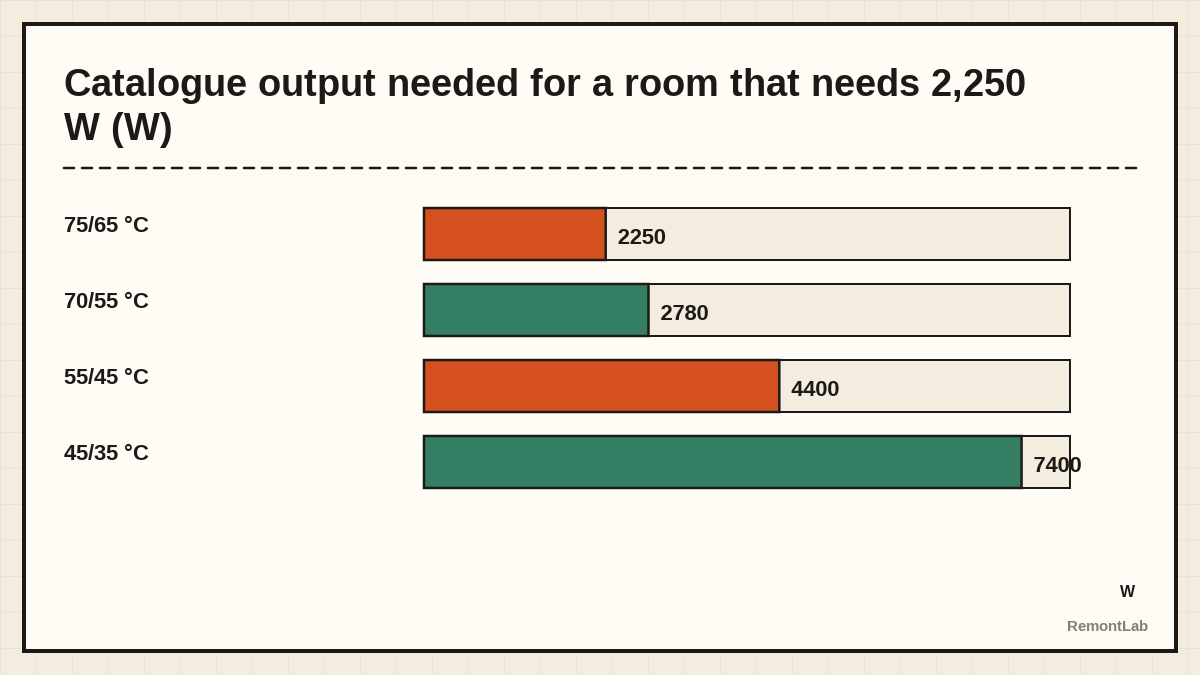
A 20 m² room with average insulation needs about 2.2 kW of heat, but on a 55/45 °C system the radiator must be rated about 4.4 kW.
Redakcja RemontLab5 min read
On this page
A radiator is usually chosen by looks and the size of the niche under the window, but something else decides: how much heat the room loses and so how much it must give to be pleasant in January. Here is how to work it out without being a fitter.
Step 1. Heat demand
Power = area × height × W/m³ (20–50 W/m³ depending on insulation), plus about 8% per external wall. Example: 20 × 2.6 × 40 × 1.08 ≈ 2,250 W.

Step 2. System temperatures
Catalogue output is rated at ΔT 50 K (75/65/20 °C). At lower temperatures: Q = Q₅₀ × (ΔT ÷ 50)1.3. On a 55/45 °C system the factor is 0.51, so you need about 4,400 W catalogue output.
The radiator calculator performs both steps for you.
Rule-of-thumb output per m² – three insulation levels
Sizing starts with the room's heat demand; only then do you choose a radiator for the installation's water temperatures. Per kb.pl the output needed per square metre is about 70–100 W/m² for very well insulated rooms, 100–150 W/m² for average insulation and 150–200 W/m² for poorly insulated ones. Other sources give 60 to over 100 W/m², which shows these are approximations. For a bathroom muratordom.pl gives even 50–130 W/m², because of the higher target temperature (24 °C) and the humid air exchange.
| 16 m² room | Very good (70–100 W/m²) | Average (100–150) | Poor (150–200) |
|---|---|---|---|
| Demand | 1.1–1.6 kW | 1.6–2.4 kW | 2.4–3.2 kW |
Our own conversion of kb.pl's ranges. If you have an installation design, the room's output is stated there and that is your best reference.
Water temperatures: 75/65, 70/55 or 55/45?
Catalogues give a radiator's output for set parameters: traditionally 70/55/20 °C (EN 442) or 55/45/20 °C for modern systems. The lower the supply temperature, the bigger the radiator you need for the same output. For houses kb.pl lists condensing boilers (about 55/45/20 °C) and heat pumps (about 50/40/20 °C). In an older block on district heating the parameters can be higher but depend on weather and building – ask the administrator. If you buy from a catalogue rated for other parameters than your installation, correct the output with the manufacturer's factor.
Room temperature changes the output
Designs assume about 20 °C. Per GLOBEnergia at 55/45 one degree changes output by several percent: at 18 °C a radiator gives about 9% more, at 22 °C about 8.8% less. If you like warm rooms (22–23 °C) size with a margin; if you keep a bedroom at 18–19 °C do not overdo it.
Example: a 20 m² living room, 2 m² window, 1980s block after insulation
- Average insulation → assume 100–120 W/m² → 2.0–2.4 kW.
- Installation 70/55/20 °C – take the catalogue output for those parameters.
- Match the width to the window: a radiator 60–80% of the window width spreads heat best.
- Pick one with slightly higher output (say 2.5 kW) and a thermostatic valve that throttles it when warm.
An example on typical assumptions; in a real building ask for the installation design.
Types and placement
- Steel panel – the most common: heat up fast, cheap and many sizes (type 11, 21, 22, 33; more plates means more output at the same width).
- Towel rails – for bathrooms; usually 300–800 W.
- Decorative (vertical, aluminium, cast iron) – dearer; make sure the catalogue output matches your parameters.
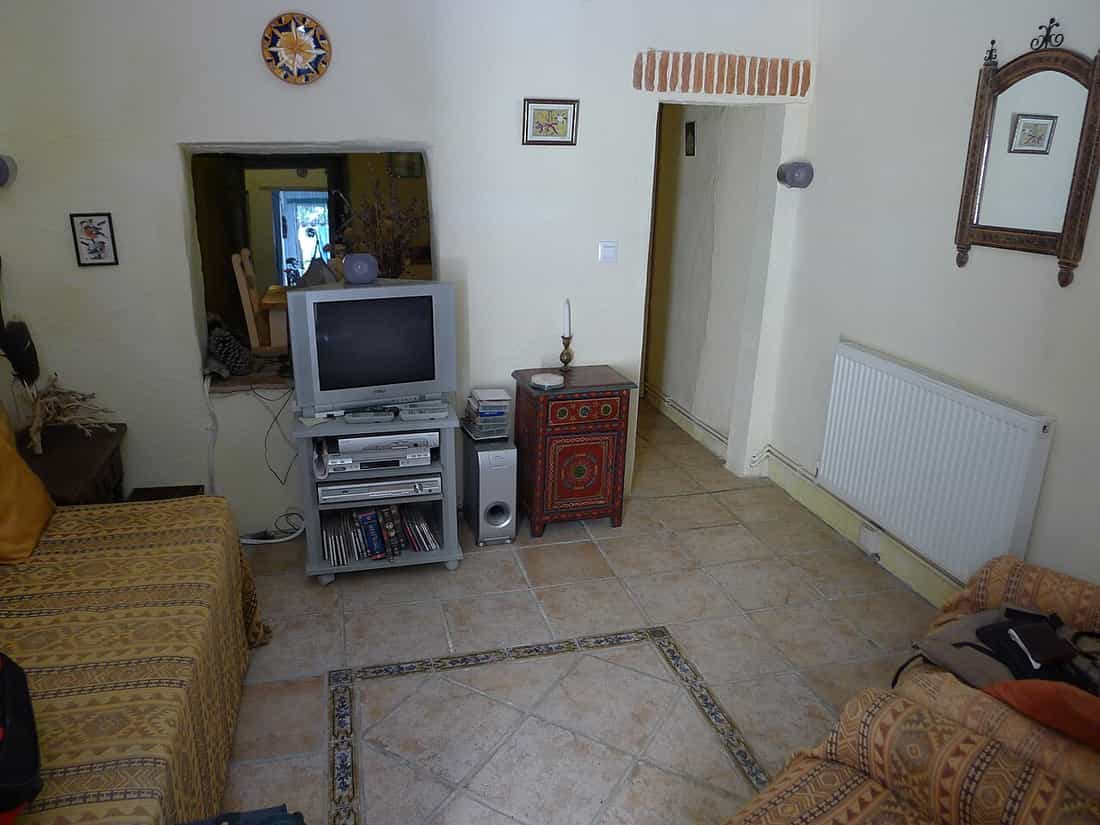
- Placement: best under the window, where it counters cold draughts; do not cover it with long curtains or furniture.
Common mistakes
- Choosing by the size of the niche instead of the demand.
- Using catalogue output for 75/65 on a 55/45 system – the radiator will be too small.
- No thermostatic valve and head.
- Swapping a radiator in a block without agreeing it with the administration – see our guide on renovating in a block.
Enter dimensions and insulation in the radiator calculator to see the output in kW and for common parameters.
Where other sites get their watts per metre
| Site | What it says | Note |
|---|---|---|
| kb.pl | 70–100, 100–150 and 150–200 W/m² by insulation; supply parameters for condensing boilers 55/45/20 and heat pumps 50/40/20 | Indicative values |
| muratordom.pl | Radiator output against the water parameters; bathroom 50–130 W/m² | Higher bathroom temperature |
| GLOBEnergia | A 1 °C deviation of room temperature changes output by several percent (18 °C: about +9%, 22 °C: about −8.8% at 55/45) | For 55/45 parameters |
Checklist before buying a radiator
- Check the installation design or the old radiator's output.
- Find the water parameters (ask the administrator or installer).
- Estimate the room's demand in W/m².
- Compare catalogue output for your parameters.
- Match the width to the window and choose a thermostatic valve.
- Agree the swap with the manager if you live in a block.
Frequently asked questions
How many watts per m²?
Typically 60–90 W/m² in a standard flat, more in old buildings, less in low-energy houses.
How many watts per m² does a room need?
Roughly 70–100 W/m² with very good insulation, 100–150 with average and 150–200 with poor (kb.pl).
What does 55/45/20 mean?
Supply water 55 °C, return 45 °C and room air 20 °C. At lower parameters the radiator must be bigger.
Sources and real examples
The figures in this guide come from the pages below (accessed at publication). Prices change – check current quotes.
Redakcja RemontLab
The desk collects prices, checks formulas and cites every number.
Did you like this guide?
Get the next ones once a month.