Materials and quantities
Self-levelling or cement screed? Anhydrite, thickness, drying and the cost of 20 m²
“Self-levelling” is not the opposite of “cement”: it can be either. We explain cement versus anhydrite, thicknesses, drying times (sources disagree) and work out 20 m² of compound.
Redakcja RemontLab8 min read
On this page
“Self-levelling or cement?” sounds like a choice between two things, but they are really two questions: how you lay it and what it is made of. Separate them and the decision gets easier.
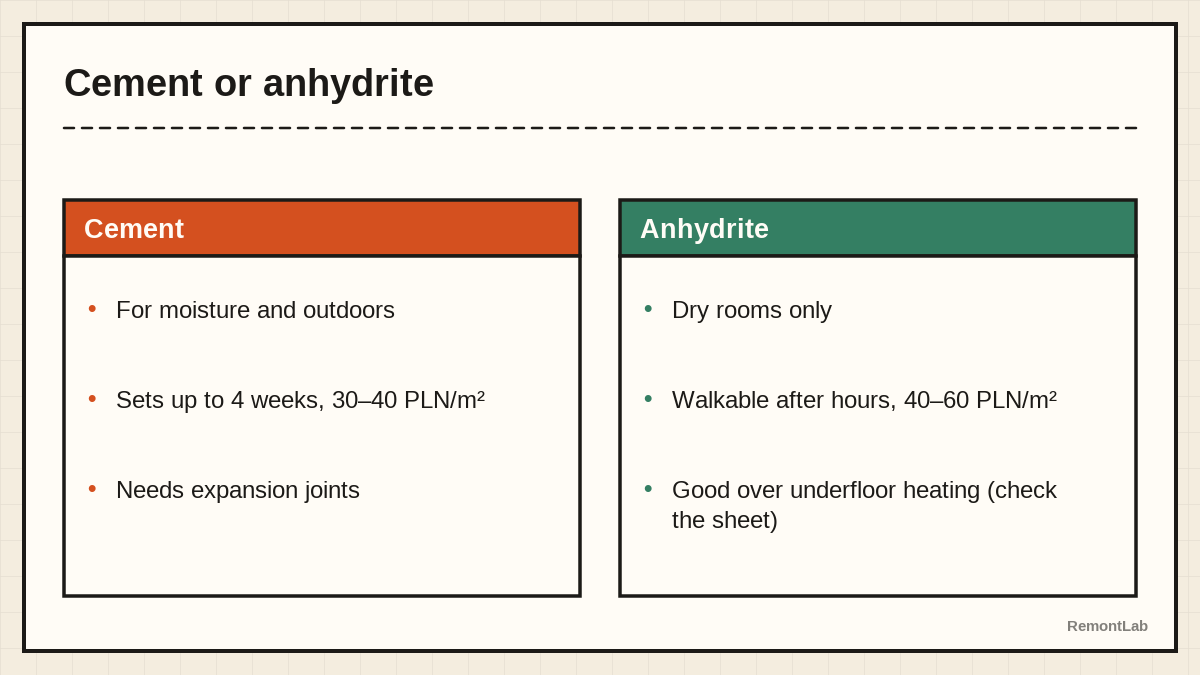
Cement or anhydrite
Cement suits damp rooms, outdoors and unheated spaces; thin layers are 1–20 mm, thicker 20–70 mm may need mesh; it needs expansion joints (above 35 m², above 20 m² with underfloor heating). Anhydrite (gypsum-based) is poured 2–100 mm, stays workable longer and usually needs only perimeter joints under 50 m² – but never in bathrooms, laundries, garages or outdoors.
Price
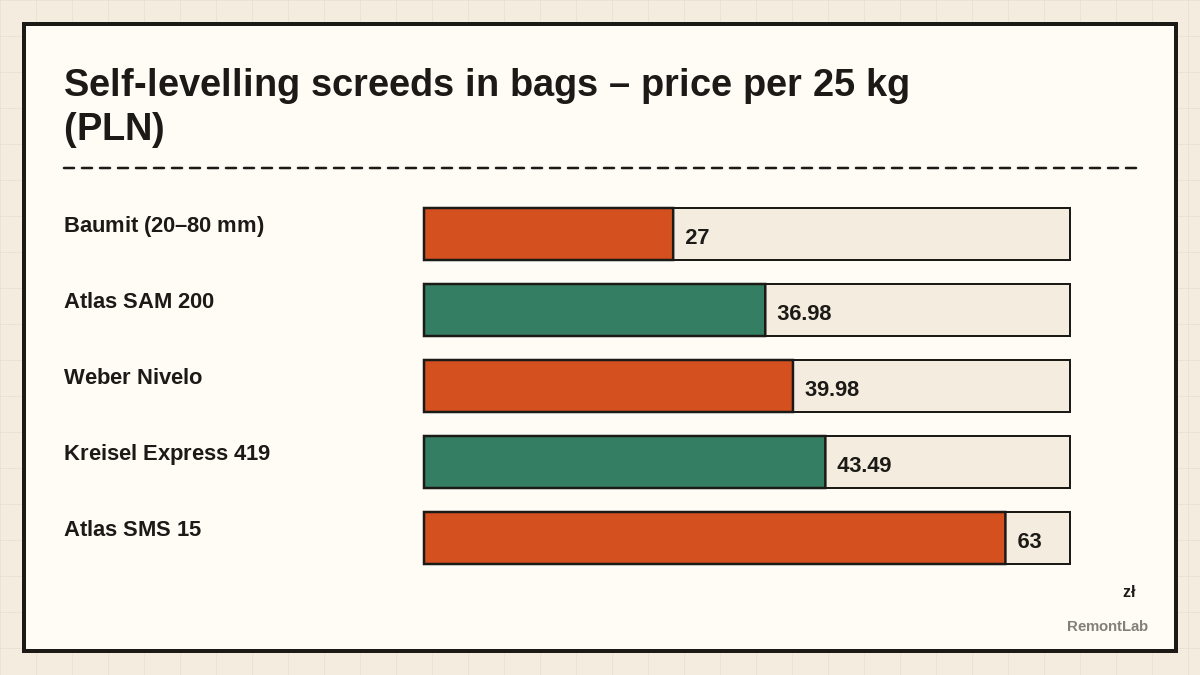
kb.pl: anhydrite about 40–60 PLN/m², self-levelling cement 30–40 PLN/m². Bags range from about 27 to 63 PLN per 25 kg.
Thickness and drying
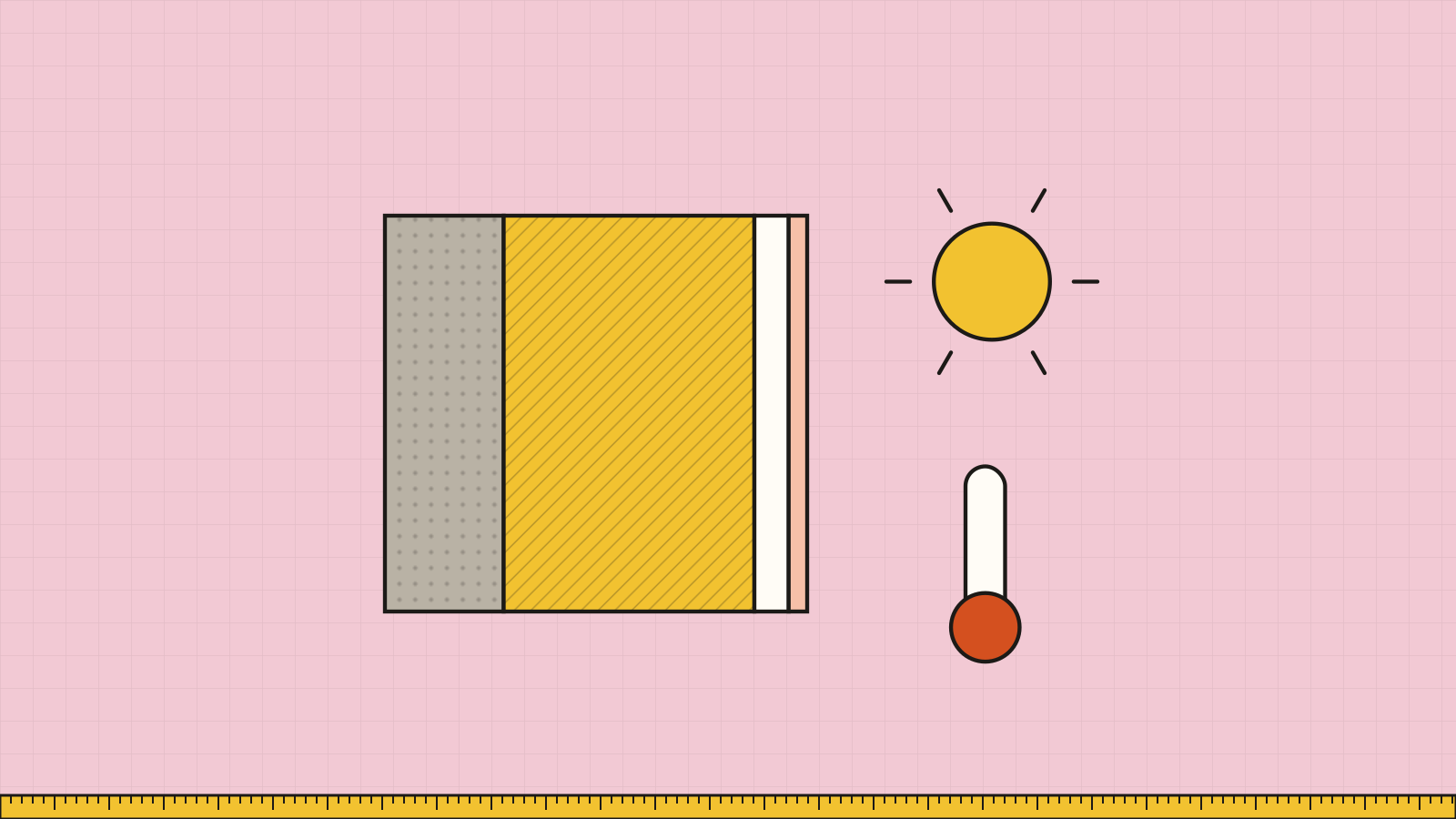
Over underfloor-heating pipes sources give different minimums (muratordom: 6 cm cement, 3 cm anhydrite; kb.pl: about 4.5 cm minimum) – use the manufacturer's sheet. Drying claims range from hours (anhydrite, Castorama) to 7–28 days (cement, Domiporta) and 7–10 days per cm (muratordom). Measure moisture before laying floors; see the screed drying calculator.
20 m² at 5 mm

Work out bags and primer with the screed calculator.
Traditional versus self-levelling – the difference at work
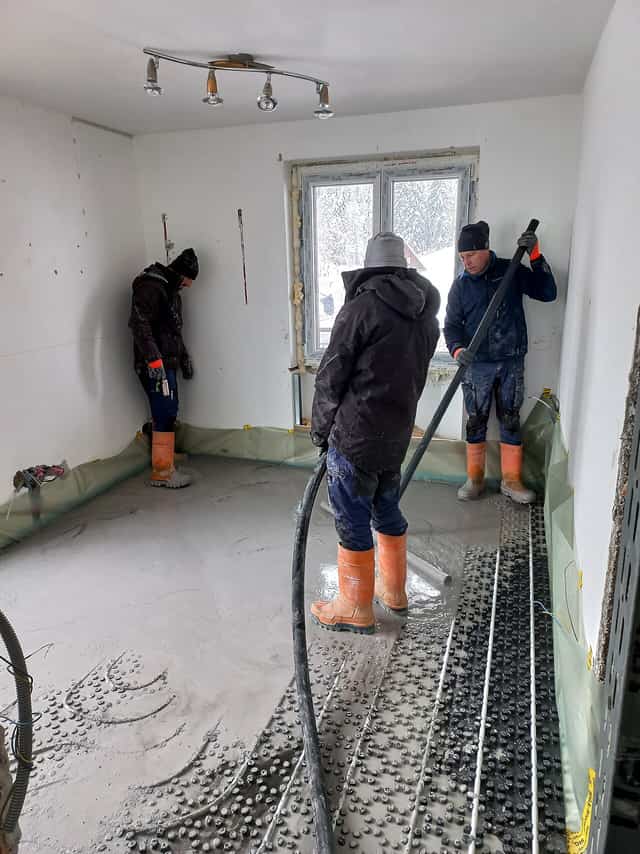
A traditional semi-dry cement screed must be spread, compacted and trowelled by hand; you have to watch that the surface is level. A self-levelling (liquid) screed flows and levels itself, so it is faster and gives a smooth surface with less labour. The price: it needs substrate preparation (primer, edge strips), sealing of gaps before pouring and respect for the mix's working time. Not every self-levelling product suits thick layers – thin ones (up to about 10–20 mm) are levelling compounds under a covering, thick ones (up to 70–100 mm) are structural screeds, often anhydrite.
Anhydrite: advantages and limits
- Advantages: good heat conductor (good for underfloor heating), flat surface, long working time, few joints.
- Limits: moisture-sensitive – dry rooms only; the sulphate laitance must be sanded off before the covering and primed; heating must wait for the recommended time after laying.
Domiporta and kb.pl stress that anhydrite is not for bathrooms, garages and outdoors.
Drying time – measure, do not guess
Instead of trusting a single number of days, measure the screed's moisture with a meter (carbide CM method or an electronic hygrometer). Typical residual-moisture limits for coverings: tiles – up to about 2% (cement), panels and parquet – about 2% (cement) and 0.5% (anhydrite), per covering manufacturers' advice; check your product's sheet. A rule of thumb: a few days to a week per centimetre of thickness in good conditions (muratordom.pl gives 7–10 days per cm). With underfloor heating the screed must first be heated up following the manufacturer's programme.
Example: ordering for 20 m² at 5 mm
Consumption of about 1.8 kg/m² per mm (product-dependent) gives 9 kg/m² at 5 mm, so 180 kg for 20 m²; with a 5% reserve 189 kg, or 8 bags of 25 kg. Bag prices of about 27 to 63 PLN give a material cost of 216–504 PLN. Add primer (about 0.15 l/m² = 3 l), edge strip and tools (spiked roller, spreader). If a crew does it, anhydrite screed is roughly 40–60 PLN/m² (kb.pl), or 800–1,200 PLN for 20 m².
Good practice for poured screed
- Prime and seal all gaps so the mix does not leak into a neighbour's flat.
- Mix exactly to the water ratio on the sheet – too much water weakens and cracks it.
- Spread quickly within the working time and de-aerate with a spiked roller.
- Protect from draughts and sun in the first days.
- Do not walk on it before the time the manufacturer states (usually hours to a day).
Count bags in the screed calculator and the covering date in the drying calculator.
What other guides say about screeds
| Site | What it says | Note |
|---|---|---|
| kb.pl | Bags from 27 to 63 PLN/25 kg; cement for damp, anhydrite for dry rooms; anhydrite about 5 cm above underfloor pipes | Mistakes: no primer, no joints, laying too early |
| Domiporta | Anhydrite 2–100 mm, cement 1–20 mm; working time 45–150 vs 10–30 min | Joints: anhydrite <50 m², cement >35 m² |
| muratordom.pl | Strength of cement 20–25 MPa, anhydrite 20–40 MPa; cement ≥6 cm and anhydrite ≥3 cm over pipes | Drying 7–10 days per cm |
Checklist before screeding
- Decide the type: dry, wet, with underfloor heating?
- Prime and seal the substrate.
- Fix the edge strips.
- Order the right amount with a reserve.
- Plan drying and a moisture measurement.
- Do not lay the covering before the manufacturer's advice.
Frequently asked questions
Can self-levelling screed be cement-based?
Yes – it can be cement or anhydrite.
How do I know the screed is dry?
Measure moisture (for example with the CM method). Coverings usually need 2% (cement) or 0.5% (anhydrite) – check the product sheet.
Can I tile on anhydrite screed?
Yes, after sanding the laitance and priming, but only in dry rooms; use a cement screed in a bathroom.
Sources and real examples
The figures in this guide come from the pages below (accessed at publication). Prices change – check current quotes.
Redakcja RemontLab
The desk collects prices, checks formulas and cites every number.
Did you like this guide?
Get the next ones once a month.