Installations and heating
Mould in a flat: where it comes from, how to remove it and why it returns
Wiping a patch takes five minutes. Finding the cause of the damp decides whether the mould returns. The order of action, humidity thresholds from several sources and when to call a pro.
Redakcja RemontLab6 min read
On this page
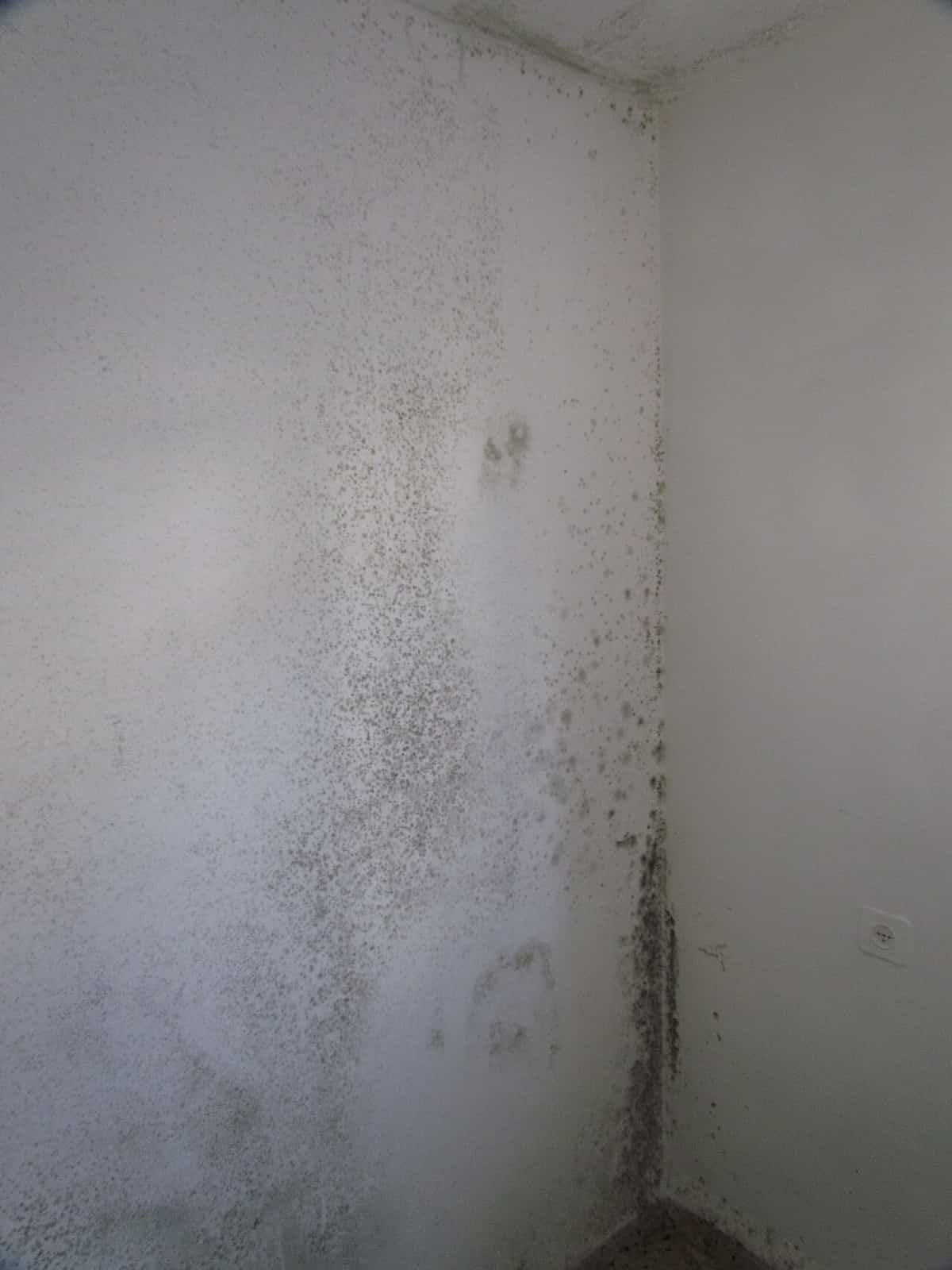
It begins with a small dark patch in a corner, usually behind a wardrobe. Then comes the musty smell. Anyone who has had mould knows how easy it is to wipe and how quickly it returns. That is because mould is not the cause but the effect: it always means too much moisture and too little air somewhere.
Where it comes from
All the guides we looked at agree on one thing: mould grows where it is damp and poorly ventilated. Steam from cooking, bathing and drying laundry condenses on cool surfaces, especially in corners and by windows where thermal bridges form. Add building defects, failed installations, floods and, in ground-floor or old buildings, damp rising from the ground. Natural ventilation, meant to take away used air, will not work without fresh air coming in (for example window vents).
What humidity is safe
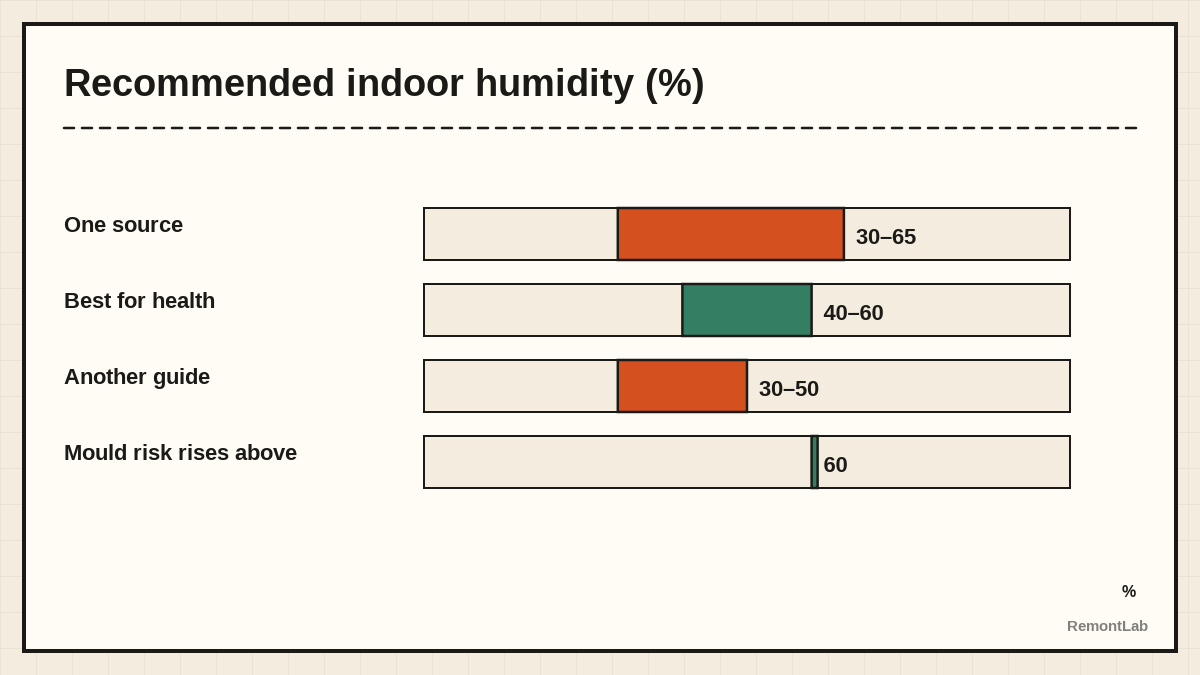
Sources differ in detail: one gives 30–65%, others 40–60%, another cites 30–50%. All agree that above about 60% the mould risk clearly grows. A hygrometer costs little and tells you whether the problem is in the air rather than the wall.
What to do, in what order
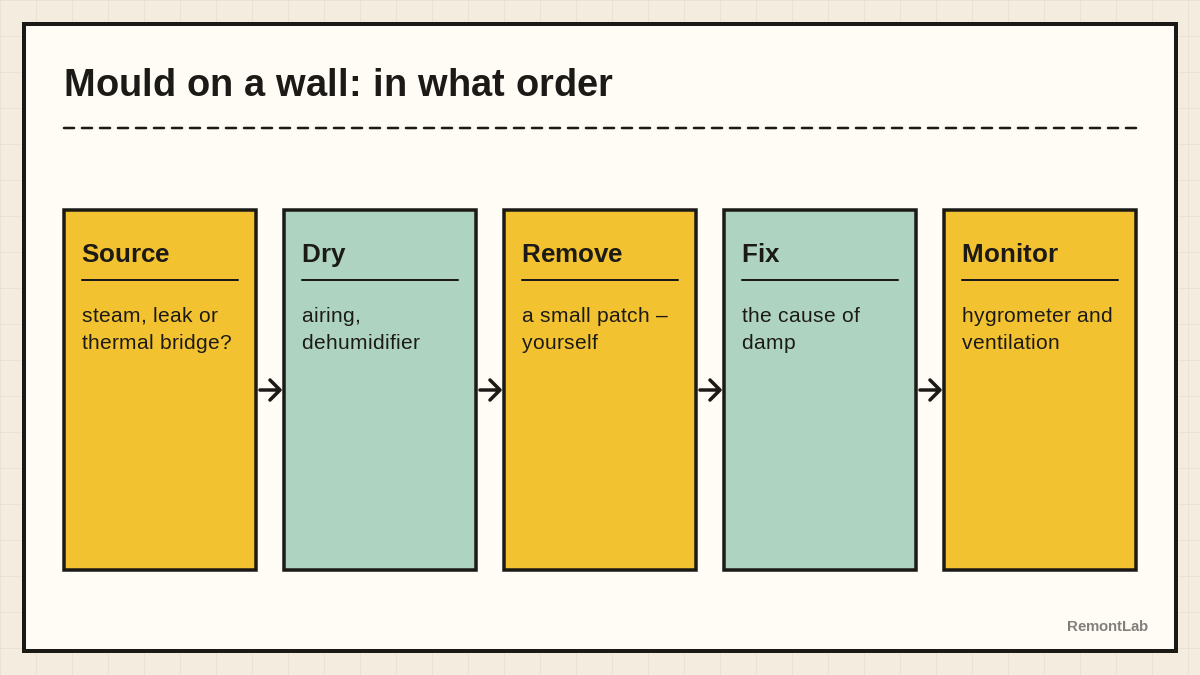
- Find the source. Bathroom steam? A leak from above? A cold corner wall? This matters more than the cleaning product.
- Dry and air. Short, intense airing (a through-draught) rather than a long tilted window.
- Remove the mould. A small patch not caused by a serious building defect you can do yourself: wipe with a fungicidal product, mark the edge and leave to dry.
- Fix the cause. Otherwise it returns.
- Monitor. A hygrometer and regular airing.
When to call a pro
When mould covers large areas, returns despite cleaning, comes with a damp wall or you suspect a leak. Then painting over only seals the problem in the wall. Note that many online guides come from firms selling dehumidifiers, ozone treatment or surveys, so check their recommendations.
Frequently asked questions
What humidity is right in a flat?
The most-quoted range is 40–60%; above about 60% the risk of mould grows.
Sources and real examples
The figures in this guide come from the pages below (accessed at publication). Prices change – check current quotes.
Redakcja RemontLab
The desk collects prices, checks formulas and cites every number.
Did you like this guide?
Get the next ones once a month.