Materials and quantities
Which wall paint? Ceramic, latex or acrylic – prices, durability and choosing by room
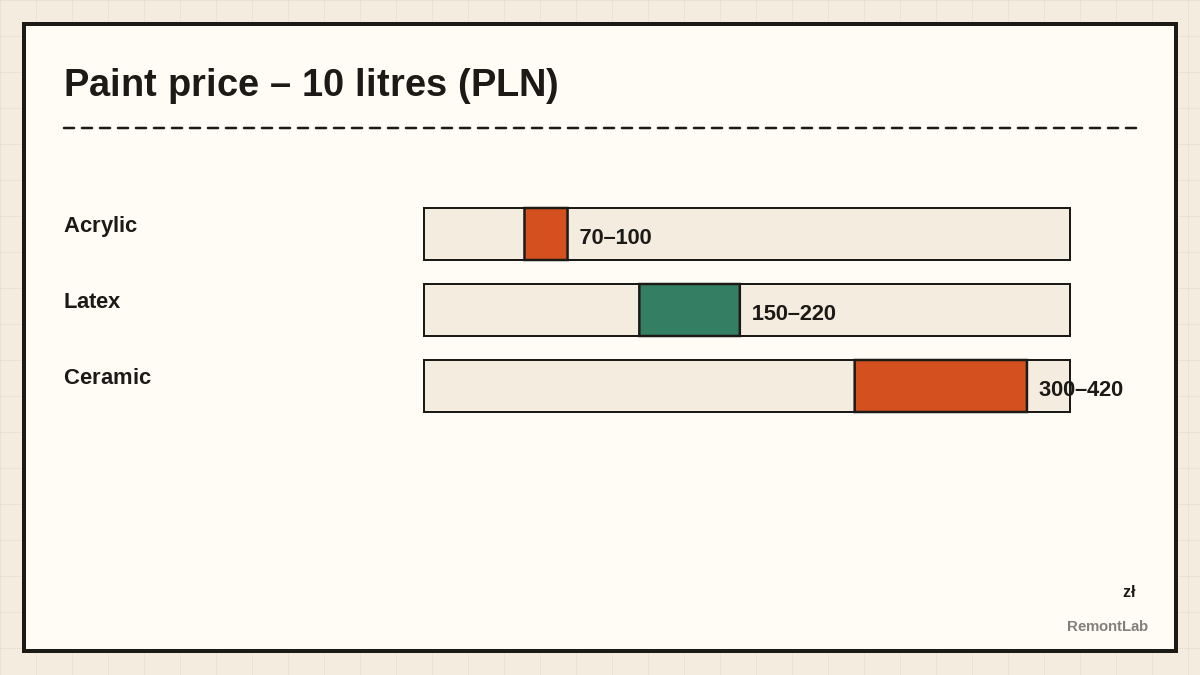
Acrylic at 70–100 PLN, latex at 150–220, ceramic at 300–420 per 10 litres. We explain scrub-resistance classes and which paint to buy for ceilings, living rooms, kitchens and bathrooms.
Redakcja RemontLab7 min read
On this page
The tins in the shop are described alike, and differ in what you will see a year on: whether the wall can be washed or shows a patch after scrubbing. Leave colour aside and look at what really tells paints apart.
Three types
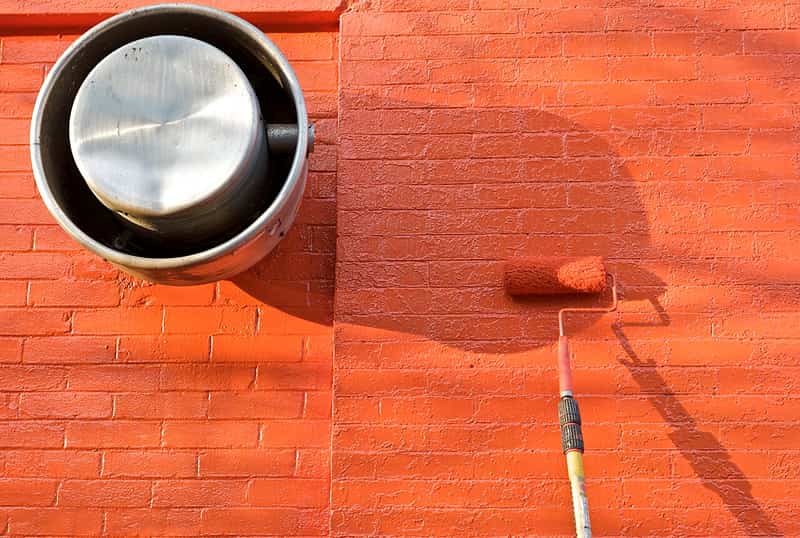
Acrylic is cheapest and least scrub-resistant – good for ceilings. Latex is acrylic with more binder: more flexible, easier to clean. Ceramic contains ceramic microspheres: the most durable and easiest to wash.
Scrub resistance
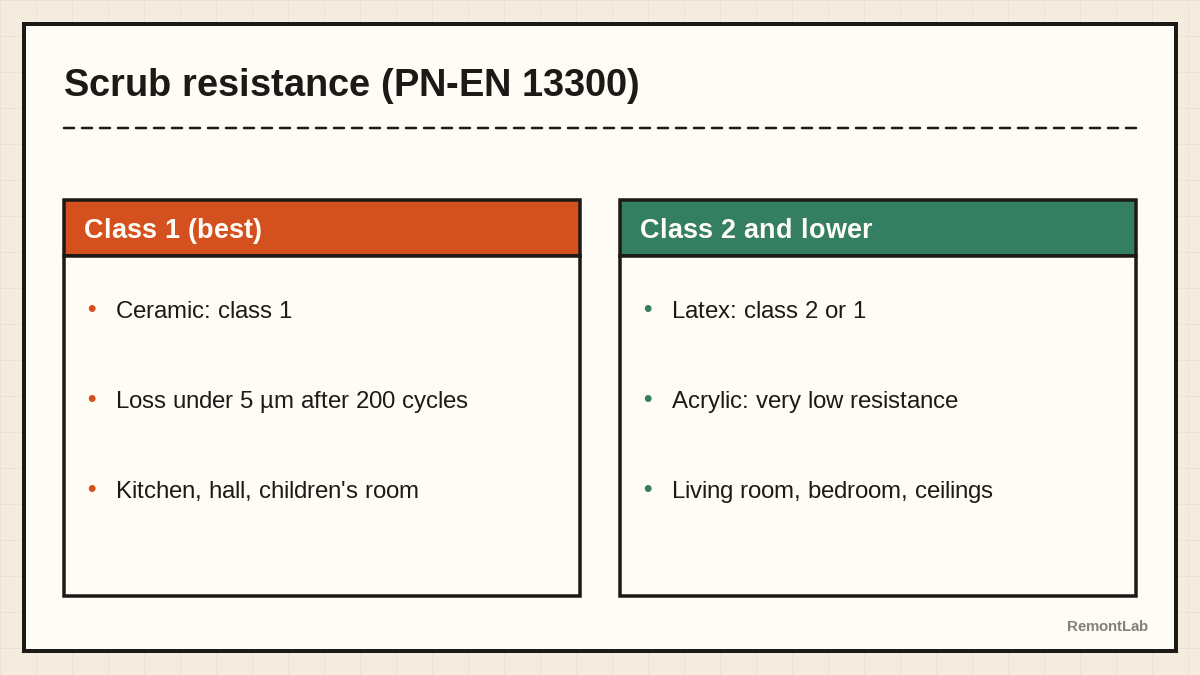
PN-EN 13300 classifies wet-scrub resistance; class 1 is best (under 5 µm loss after 200 cycles). Per cenauslug.pl acrylic is very low, latex class 2 or 1, ceramic class 1. Read the class on the tin rather than trusting the word “ceramic”.
By room
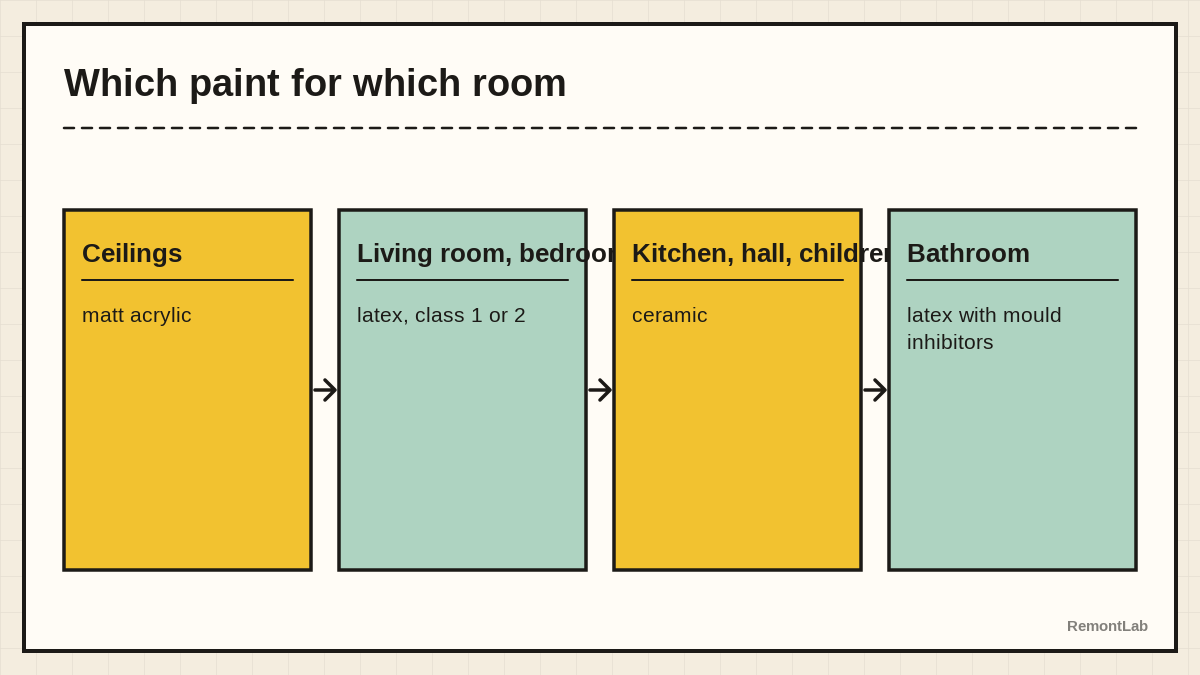
Ceilings: matt acrylic. Living room and bedroom: latex. Kitchen, hallway, children's room: ceramic. Bathroom: latex with mould inhibitors (kb.pl advises against acrylic in shower zones). Matt hides wall flaws; gloss wipes clean easier but shows flaws.
Mistakes
No primer, recoating too soon (usually 2–4 hours), washing before about 28 days, a cheap foam roller, and judging colour from a card instead of a patch on the wall.
Work out litres with the paint calculator.
Sheen: matt, mid-sheen, satin – which to choose
Sheen affects look and cleanability. Deep matt hides wall flaws best and looks calm and elegant, but each mark (fingers, a spot) is harder to remove. Matt and mid-matt are the compromise – most wall paints. Satin and semi-gloss wash easily, so they suit kitchens, bathrooms and hallways, but they show wall flaws and reflect light. The rule in the guides: the worse the wall, the more matt the paint.
What differs: composition in brief
- Acrylic – acrylic binder, little binder, more fillers; absorbs stains, low scrub resistance; cheap, good for ceilings.
- Latex – latex or acrylic-latex binder, more binder; flexible, cleans more easily, absorbs less water.
- Ceramic – contains ceramic microspheres, gives a harder, smoother film resistant to scrubbing (class 1).
- Silicone / silicate – more for facades; rarer indoors.
muratordom.pl adds that ceramic paints have a low VOC content (under 10 g/l), which matters in bedrooms and children's rooms.
Coverage, not the tin price, decides cost
cenauslug.pl gives ceramic coverage at about 12–16 m²/l, while muratordom.pl says 4–10 m²/l for two coats – the gap comes from counting coats and substrate together. With these numbers, painting 100 m² (two coats, 200 m² of surface) comes out like this (our calculation, coverage 12 m²/l per coat): about 17 l of paint – at the price ranges in our guide: acrylic about 120–170 PLN, latex about 260–370, ceramic about 510–710. The difference between cheapest and dearest is a few hundred zloty – less than a day of a painter's labour – so in heavily used rooms cheaper paint is rarely a good saving.
By room and for children
- Children's room: ceramic or latex with low VOC; the walls will be dirtied and washed.
- Kitchen: ceramic or mid-matt latex, especially by the worktop and hood.
- Bathroom: latex with mould inhibitors; shower-zone walls are better tiled; ventilation matters more than paint.
- Ceiling: matt acrylic, ideally one white.
Preparing the wall and applying paint
- Sand out bumps and vacuum.
- Prime – primer evens out absorbency and saves paint.
- First coat thinned as the maker advises (if stated).
- Second coat after 2–4 hours – roller in one direction, without pressing.
- Touch up only when dry; test the colour on a small patch in daylight and evening light.
Common mistakes
- Acrylic in a kitchen or children's room – the wall wears quickly when washed.
- Painting without primer.
- Too short a gap between coats.
- Washing a fresh film before it cures (about 28 days).
- Buying a colour “by eye” without a sample – the same code can look different on different substrates.
Work out litres in the paint calculator and read “How much paint for 50 m²”.
Compared with other guides
| Site | What it says | Note |
|---|---|---|
| cenauslug.pl | PN-EN 13300 scrub classes; 10 l prices: acrylic 70–100, latex 150–220, ceramic 300–420 PLN | Washing after 28 days |
| muratordom.pl | Ceramic or latex: ceramic has VOC under 10 g/l, dries in 2–6 h; paint types and properties | Coverage 4–10 m²/l for two coats |
| kb.pl | Bathroom: latex; sample paint prices (50–90 PLN per tin); coverage 12–14 m²/l | Shop prices change |
Checklist when choosing paint
- Check the scrub class and sheen.
- Match paint to the room (kitchen, children, bathroom).
- Ask about VOC for a bedroom or children's room.
- Count litres (2 coats) and add a reserve.
- Buy primer and tools.
- Test the colour.
Frequently asked questions
Is ceramic paint better than latex?
It is more durable and easier to wash (class 1), so better in kitchens, hallways and children's rooms; in a bedroom latex is often enough.
Is ceramic paint suitable for a bedroom?
Yes, but in a bedroom latex is often enough. Ceramic has low VOC and high washability – key in kitchens, hallways and children's rooms.
What sheen for a kitchen?
Mid-matt or satin – easier to keep clean; poorer walls are better painted matt.
Sources and real examples
The figures in this guide come from the pages below (accessed at publication). Prices change – check current quotes.
Redakcja RemontLab
The desk collects prices, checks formulas and cites every number.
Did you like this guide?
Get the next ones once a month.